Wildlife & Nature
Looking closer at the blue heron.
Five photographs from British Columbia and Washington, and what makes a heron worth photographing even when it is standing still.
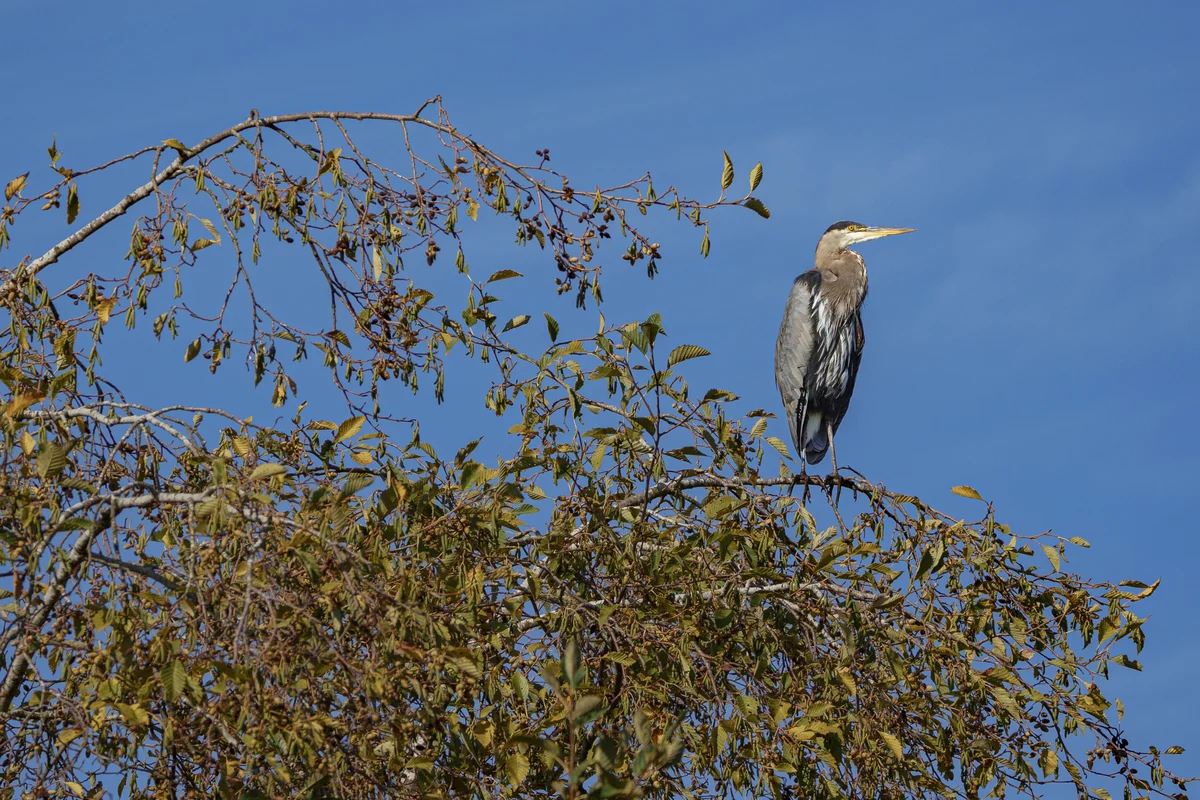
Photograph 01 / 05
A heron doesn't need to be doing something dramatic to make a good photograph. The curve of its neck, the detail in its feathers and where it stands can give you plenty to work with.
It's tempting to wait for a heron to catch a fish or take off. These photographs, taken on different visits in British Columbia and Washington, give the quieter moments some attention too.
01
Leave some room around the bird.
The heron stands among crossing branches, with open sky behind its head. That patch of blue keeps it easy to pick out. There is also space beyond the tip of its bill, so it isn't looking straight into the edge of the picture.
A tighter crop would show more of the bird, but lose much of that perch. The branches are busy without cutting across its face. That distinction is more useful than trying to make every part of the background tidy.
Before zooming in, check what you'd leave out. Here, the tree is worth keeping.
02
A portrait can show more than a face.
The yellow eye and long bill draw attention first. Look past them and there are thin pale feathers over the shoulder, darker folds beneath them, and several shades of blue-grey.
Those small details would be harder to see with more of the wetland included.
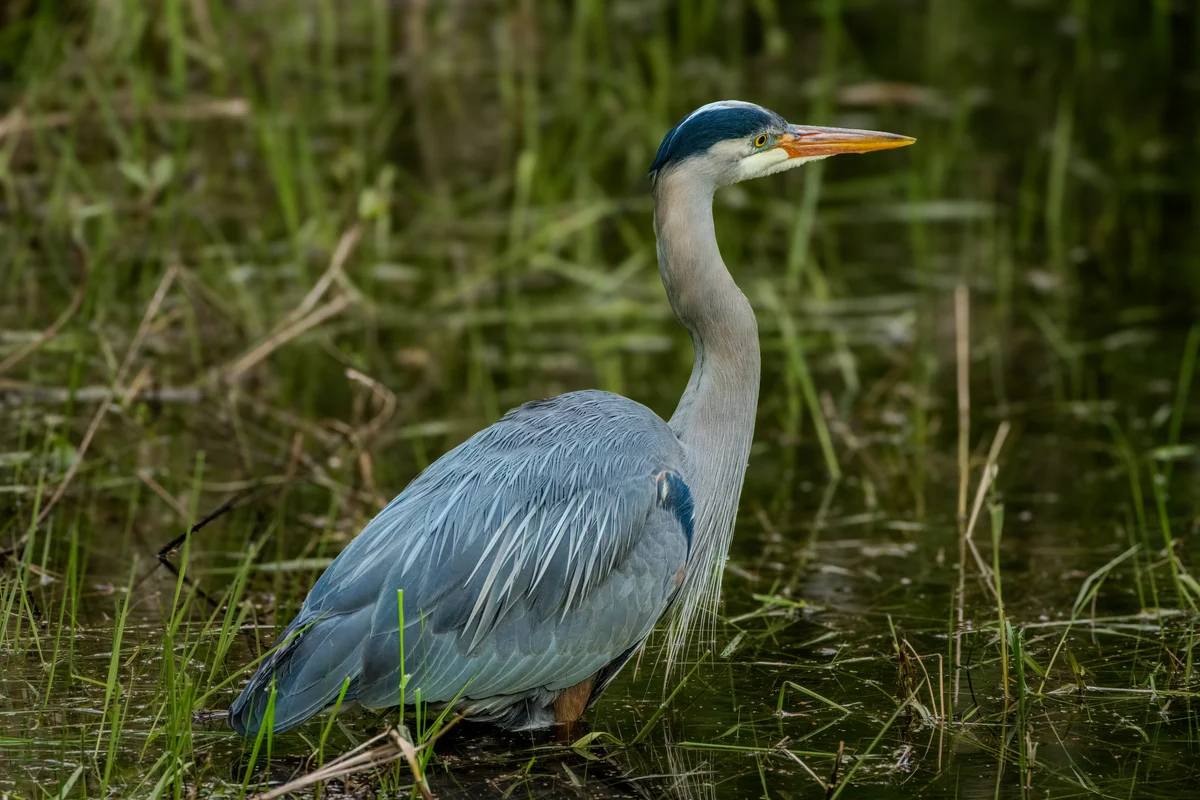
· Photograph 02 / 05
With the bird turned away, the folded wing and trailing feathers become the focus. Below its perch, the reflection adds another reason to keep the water in the frame rather than crop at the bird's feet.
Not every portrait needs an eye looking back.
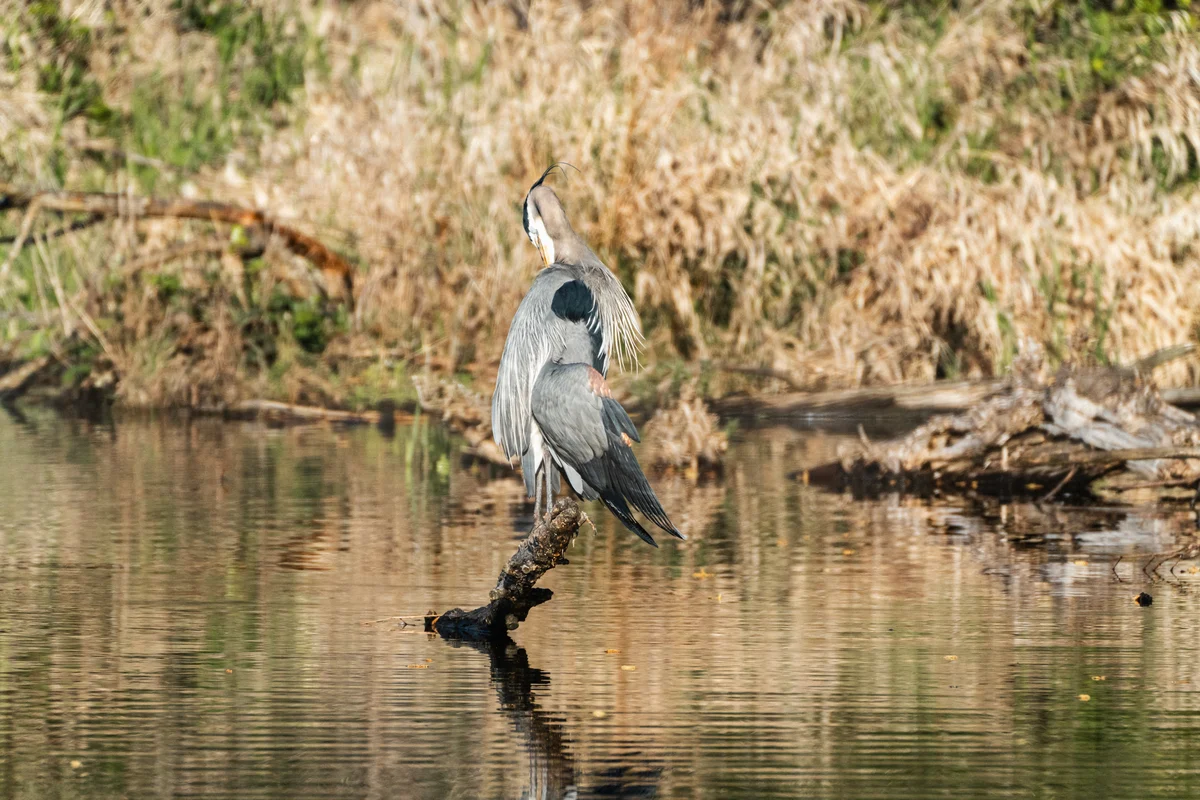
· Photograph 03 / 05
In black and white, the long neck stands out against dark water. The pale grasses spread across the foreground, but the head and bill remain clear above them.
There is less need to study individual feathers here. The curve of the neck and the long, narrow bill are enough to hold attention. A clear outline can be just as interesting as fine detail.
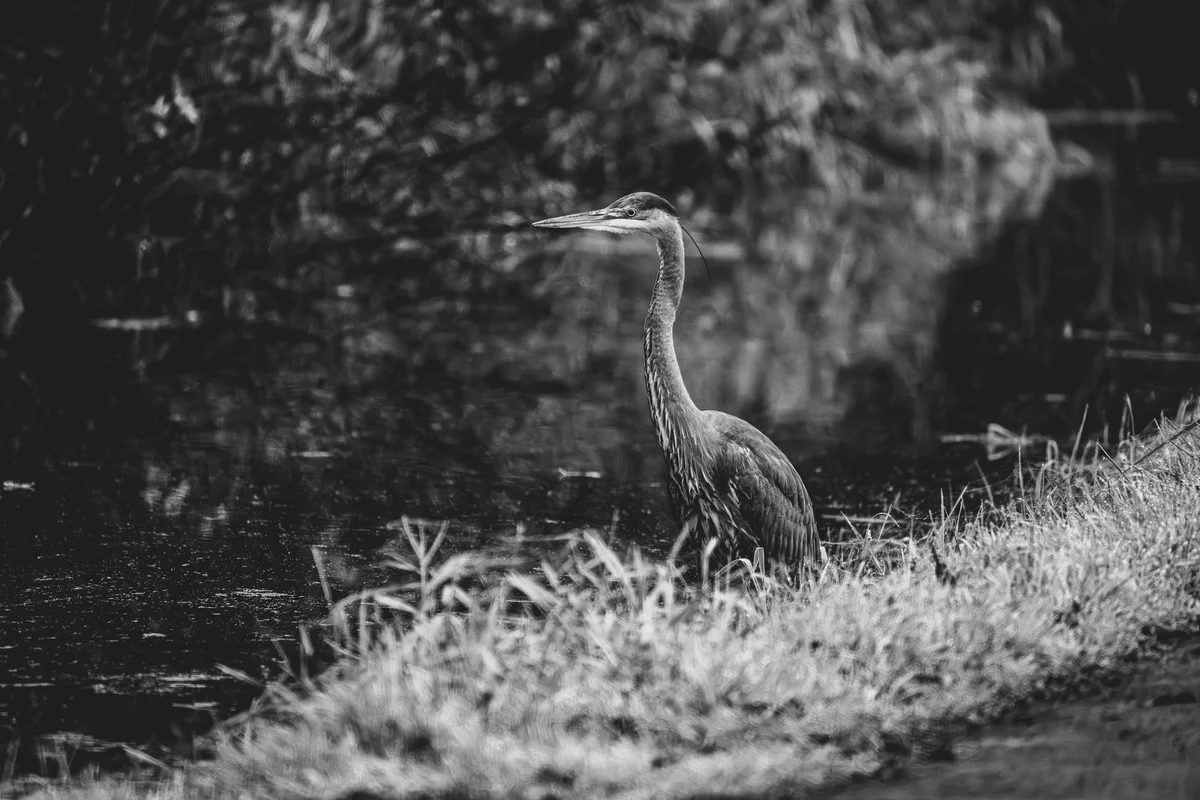
· Photograph 04 / 05
Kent, Washington ·
Photograph 05 / 05
03
When the wings open.
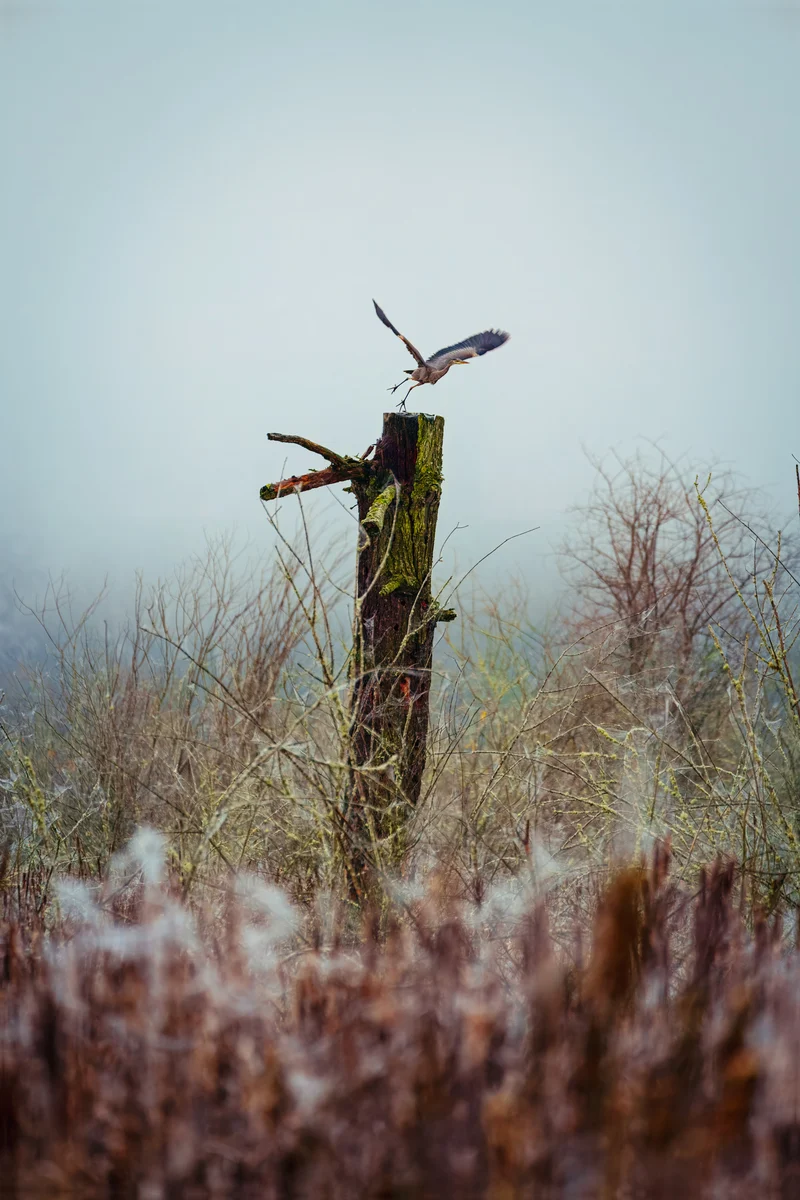
Above the broken trunk, the heron's wings spread against pale sky. The bird is small in the frame, but easy to find: the trunk draws the eye straight up to it.
The perch helps explain the moment. It shows where the bird is leaving from and gives a sense of height above the wetland. There is a reason to keep it in the picture, even when the wings are the main attraction.
A flight photograph can still be a photograph of a place. Filling the frame with the bird would tell a different story.
Looking closer does not mean moving closer.
Keep enough distance for the bird to carry on naturally. If your approach makes it stop what it is doing, change posture or move away, back off. A bird freezing in place can also be a sign of stress. Follow local distance rules and closures, and give nests plenty of space.
Never make a bird fly for a photograph. Audubon's guide to ethical bird photography explains the signs to watch for and the care needed around birds and their habitat.
Before you go
A few practical questions.
Where and when should I look for herons?
Try public paths beside wetlands, ponds, lakes and sheltered shorelines. Great blue herons use both fresh and salt water, and also feed in fields. Check recent local sightings rather than expecting a particular bird to be at a particular perch.
Early or late in the day, low sunlight can bring out feather texture; overcast conditions soften shadows. Good light and an active bird won't always arrive together. At a coastal location, check the tide as part of planning your visit.
Why do herons stand still for so long?
Standing still is one way they hunt, watching the water for prey. Watch from a distance, but don't assume every stationary heron is feeding.
Do I need a long lens?
A telephoto lens helps put more of the bird in the frame while keeping your distance. With a shorter lens, look for a wider photograph that includes the water, trees or shoreline. If you can't get the close-up without disturbing the bird, leave the close-up.
What should I change when the bird starts moving?
For a standing bird, focus on the eye when it is visible and check that your shutter speed is fast enough to avoid camera shake and small movements. For flight, use a faster shutter speed, continuous autofocus (AF-C or Servo) and short bursts. Shutter priority is one way to control the speed; manual exposure with Auto ISO lets you set both shutter speed and aperture.
Review feather and eye detail at full size, then adjust. A setting that works for a steady bird won't necessarily keep moving wings sharp.
Further reading: Cornell Lab on great blue heron habitat and behaviour; Anne McKinnell's beginner guide to bird photography for equipment, exposure and focusing.
The next time a heron stays on its perch, take a look through the viewfinder before waiting for it to move. Check the background, the shape of the neck and the room around the bird. There may already be a photograph worth making.