
Behind the Frame
Beyond the colour.
Photographing autumn in Washington
A path, a stretch of road, a cabin, a bench. Looking back at five photographs, the leaves are only part of what keeps me looking.
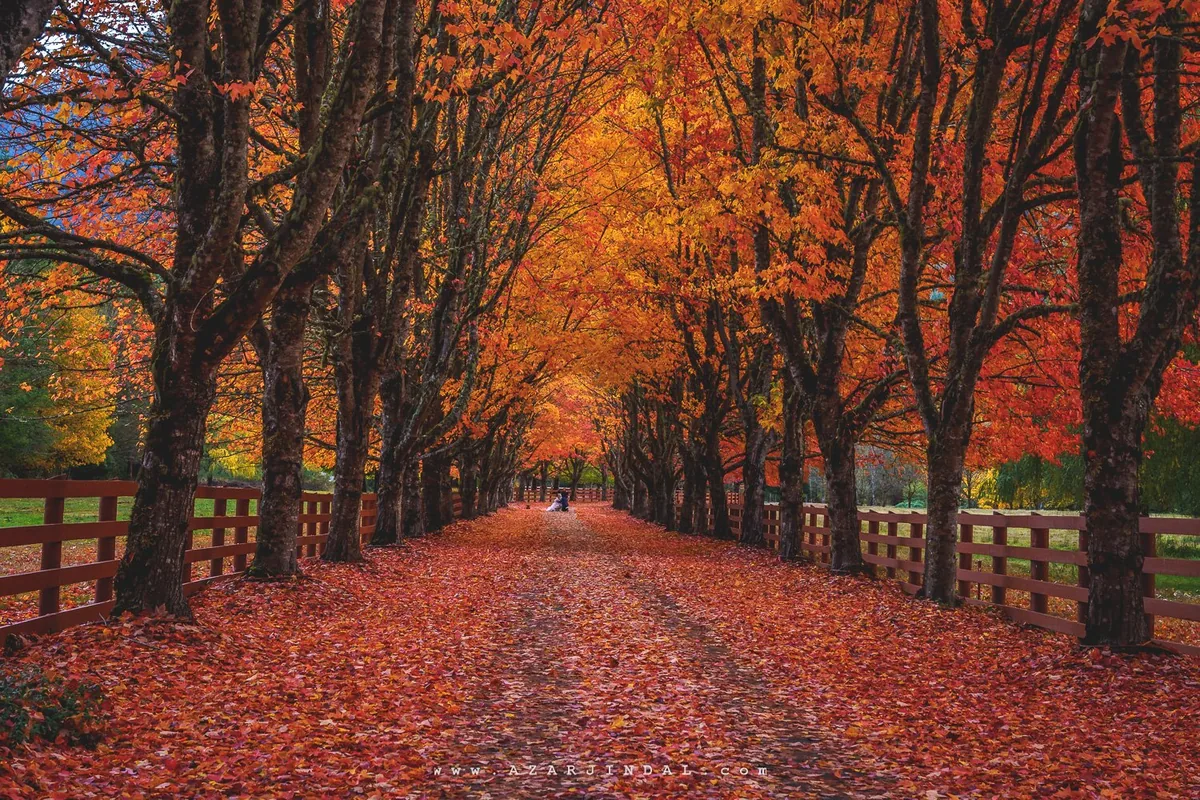
Autumn colour is an easy reason to stop. A row of orange trees, yellow leaves beside a river, a path almost hidden beneath them. The harder question is what to put inside the frame.
Looking back through my photographs from Washington, I notice how often something ordinary holds the picture together. A fence. A bend in a road. A wooden bench. The colour gets my attention, but those smaller structures give my eye somewhere to go.
I lived in Washington before moving to British Columbia. These photographs are from Snoqualmie, Renton and Leavenworth, across different autumns. This is not a list of places to catch peak colour. It is a closer look at why these particular frames work for me, and a few things you can try when the scene in front of you feels beautiful but busy.
01 / Give the eye a way in
The colour needs a little structure.
In the Snoqualmie photograph above, orange fills the canopy and the ground. There is a lot to take in. The dark trunks keep it from becoming one continuous patch of colour. Their repetition, together with the fences, leads towards the opening at the end of the path.
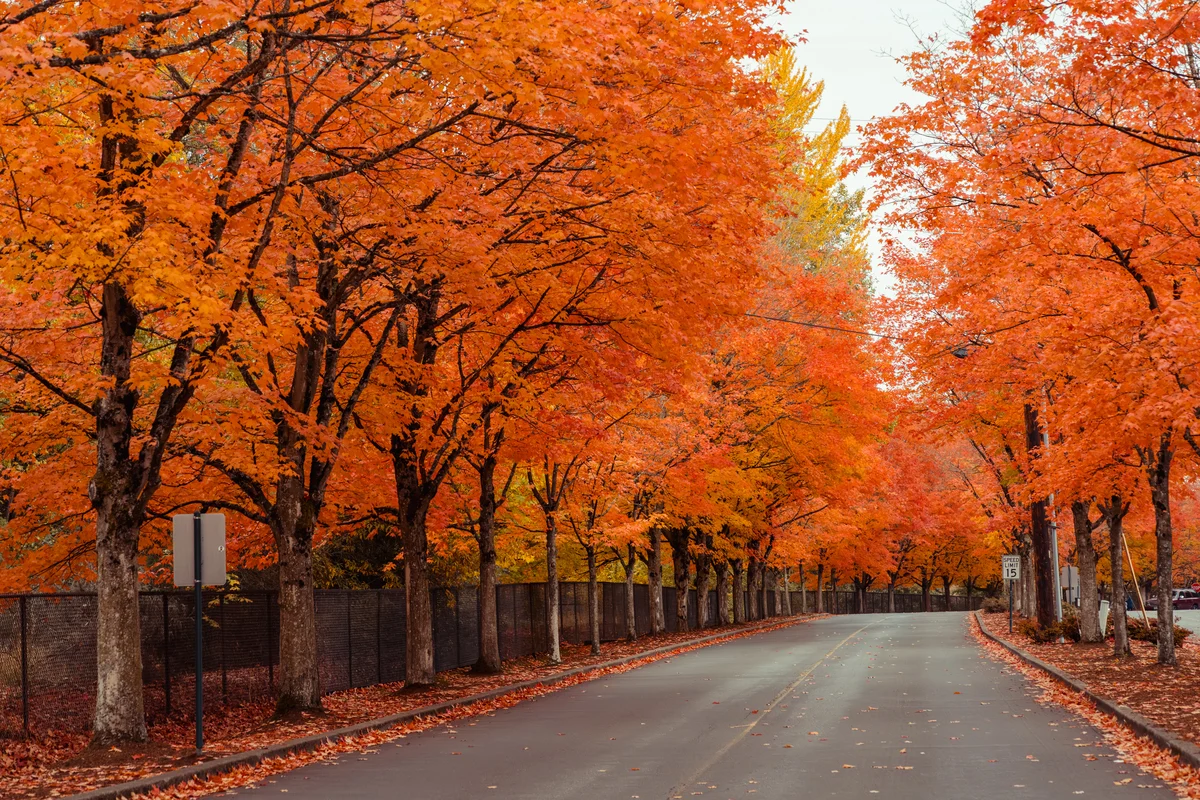
The Renton road below does something similar with much less colour in the foreground. Its grey surface gives the trees a quieter centre. The bend carries the view around a corner rather than letting it stop at the first bright branch.
These are two quite different autumn scenes, but both have a clear direction. Neither needs every leaf to be equally important.
Try this: Before adding more trees to the frame, find one line you can follow through it. Then check whether the edges of the photograph help that line or interrupt it. With roads, work only from a safe, permitted position away from traffic.
02 / Leave room around the colour
Not everything needs to be golden.
The cabin beside the river in Leavenworth is surrounded by yellow trees, but the darker hillside is just as important to the picture. The river opens up the foreground. Behind the cabin, the trees rise towards the slope, with pale mist separating parts of the background.
I like how small the cabin feels in that setting. It gives me somewhere to look without taking over the landscape. The yellow leaves stand out because they sit beside darker greens, water and shadow, not because every part of the frame is equally bright.
That is a useful way to judge a busy autumn scene: what is the colour sitting against? A quieter area can do more for the photograph than another branch full of leaves.
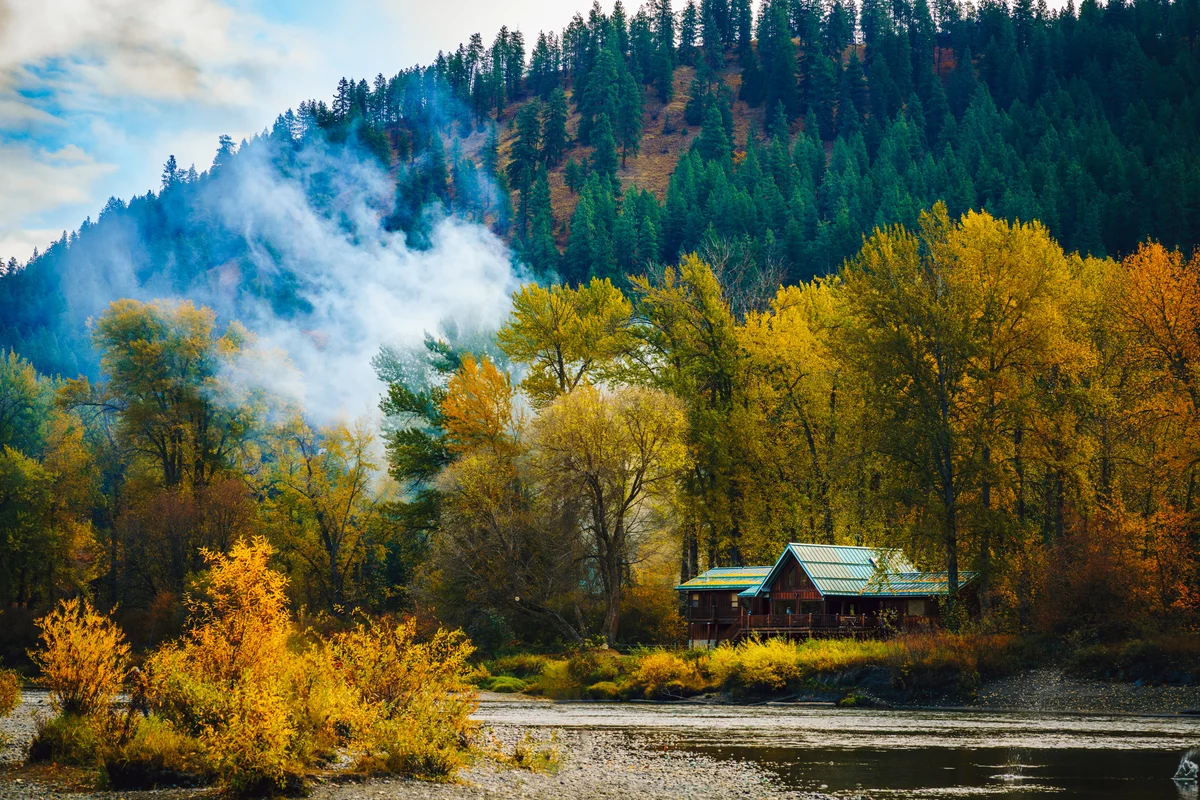
Leavenworth, Washington.
03 / Let something ordinary lead
Sometimes the subject is a bench.
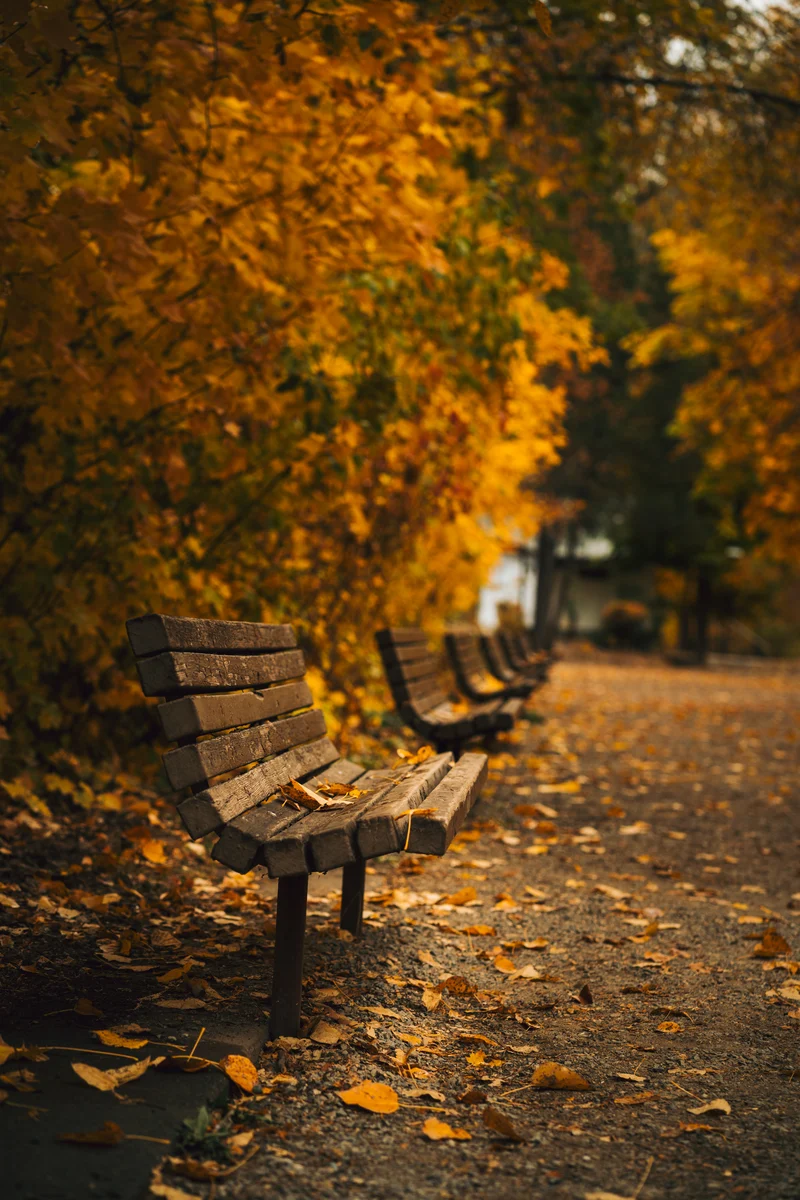
There is no mountain or dramatic sky in this frame. The nearest bench has enough texture and shape to hold the foreground: worn wood, a few leaves on the seat, the dark supports beneath it.
The other benches repeat that shape into the distance. They become softer as they recede, while the leaves overhead establish the season without needing to be the main subject.
This is one of the things I enjoy about looking closer. A place does not have to offer a grand view to give you a photograph. An ordinary object can make a busy setting easier to read.
Try this: Choose one small subject before deciding how much of the surroundings to include. Make a wider frame and a tighter one. Compare which version makes that subject easiest to find.
The leaves tell me the season.
The rest of the frame gives me a reason to stay.
04 / Pay attention to the frame
Look up. Then look around the edges.
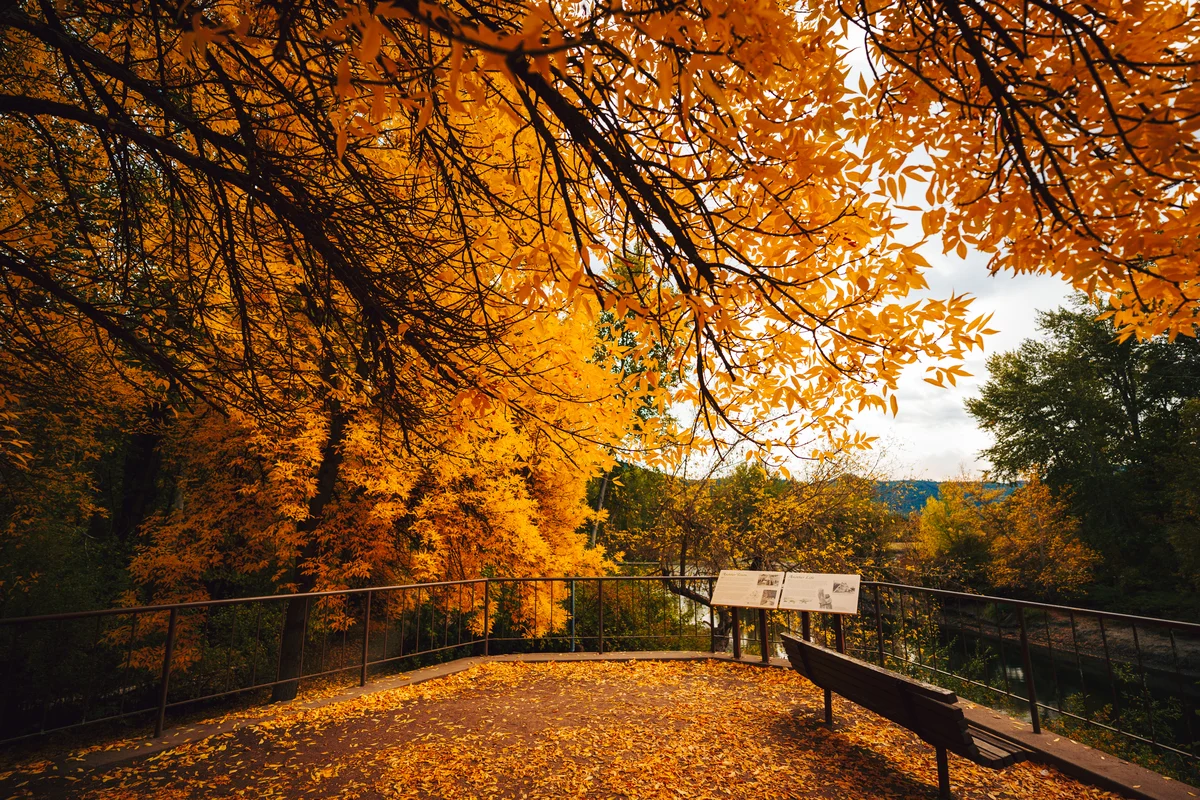
At the Leavenworth overlook, the branches form a loose roof over the scene. Below them, the railing curves around the open space and the bench anchors the lower-right corner.
I like the contrast between that bright canopy and the darker structures underneath. It makes the overlook feel sheltered even though the view beyond it is open. The photograph includes the signs and railing, too; this is a place people use, rather than an untouched landscape.
It is worth checking the whole frame before taking another photograph. A branch near the top, a patch of sky or a line entering from the side can change the balance more than the brightest tree in the middle.
A few things to take on your next walk.
These photographs do not share one recipe. Some are filled with colour; others give a large part of the frame to a road, water or a small subject. What connects them is that I can find a way through each picture.
The next time an autumn scene catches your attention, enjoy the colour first. Then spend another moment looking at what surrounds it.
Before you move on
- Can you name the subject without saying “the autumn colours”?
- Is there a line or repeated shape that leads towards it?
- Where does the eye get a quieter place to rest?
- Does anything at the edge distract from what you want to show?
- Would a wider or tighter frame tell the story more clearly?
There is no need to force all five answers into every photograph. Sometimes a bench beneath a tree is enough.
Before you go
Finding your own autumn photograph.
The pictures are a starting point, not a route to follow exactly. Here are a few practical questions to help turn an idea into an outing.
How do I find a promising spot, rather than just copy a pin?
My planning starts with maps, satellite imagery and weather forecasts. Look for publicly accessible paths, bends in rivers, overlooks and tree-lined spaces. Then, on the ground, look for the things in this essay: a clear subject, a line through the frame and a quieter background. A map can suggest possibilities; it cannot tell you what the light or foliage will look like when you arrive.
When should I go for autumn colour?
There is no single peak date for all of Washington. Elevation and that year's weather affect when leaves change and how long they stay. Check recent, dated reports or photographs from the specific area, and recheck conditions close to your visit. These photographs come from different autumns; they are examples of scenes to look for, not a forecast for your trip.
What time of day works best? Does it need to be sunny?
I generally prefer the lower light around sunrise or sunset for landscapes, but that is a preference, not a rule. Overcast light can help with woodland scenes by reducing harsh contrasts; low sunlight can bring out texture or illuminate leaves from behind. Decide which effect suits your subject, then check the forecast and light direction. A useful question is not just “What time is sunset?” but “Where will the light fall on this subject?”
Can you share the exact spot, parking or walking route?
For a particular photograph, get in touch with its title or link. I share popular, publicly known locations, while keeping less-known or fragile places more general. Before travelling, check the relevant landowner or park's current access, parking and opening information. An old photograph does not establish a right of access; a road or a cabin in the picture is not permission to enter.
Planning references: my photography FAQ for tools, light preferences and location sharing; Photography Life's fall foliage guidance for scouting and variable seasonal timing. The composition examples above are drawn from my own photographs.